Ateliermob @ Blueprint nr. 330
Once the apex of contemporary excellence, Portugal's architecture has paralleled the Eurozone crisis with a fall from grace. But there may be hope: a new wave of architects is uniting with the community to create provocative new projects with the potential to reclaim the civic domain
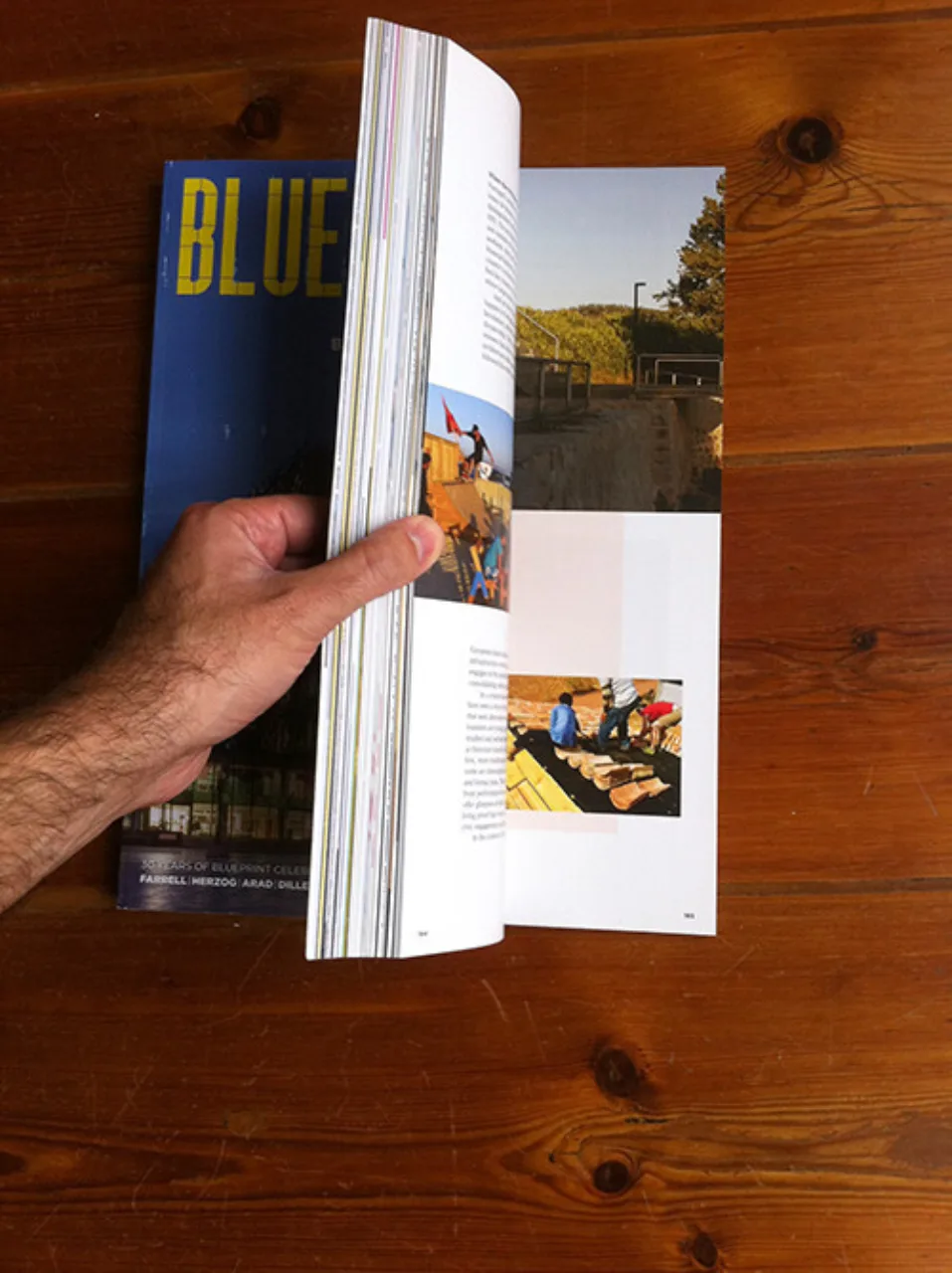
When the Pritzker Prize winner was named in March 2011, Portugal's architects were overjoyed. The Porto-based Eduardo Souto de Moura was the second Portuguese architect to be distinguished with the award, after Álvaro Siza's triumph in 1992. The accolade officially helped set in stone -- both inside and outside of Portugal's borders -- a national architectural aesthetic. But two months later, in May 2011, a €78bn IMF/EU financial bailout was approved and with it the collapse of the country's economic system was made official. Young architects fled the country to greener shores in Brazil, Angola and the UAE, where large-scale projects abound.
And yet the crisis may well have been the best thing to happen to Portuguese architecture since the 1974 Carnation Revolution, which freed the nation from half a century of fascist dictatorship. The country that has produced two Pritzker-Prize winners has also created a powerful, crystallised professional architecture elite, nurtured by the years of economic boom that followed the 1986 entry of Portugal into the EU -- when European funds allowed large-scale public works and a national infrastructure overhaul. Such a professional group actively engages in the aesthetics and processes of the masters -- consolidating what could be deemed a Portuguese style.
In a counter-move fuelled by the crisis, the past two years have seen a rise in the formation of small, experimental studios that seek alternative ways to practice architecture. Their founders are young, motivated, well-educated; many have lived, studied and worked abroad. Driven by a strong idea of what architecture should be, many have been disillusioned by their first, more traditional work experience. Idealistic on the whole, some are downright subversive, while others rely on humour and formal puns. Their work is fundamentally small-scale -- from performance to self-build housing -- but their methods offer glimpses of what could be a systemic change, offering living proof that even a crisis can precipitate opportunities for civic engagement and the profession.
In the context of their surroundings, these architects work in multidisciplinary teams, collaborating with artists, designers, social scientists and engineers. Their scale allows them to focus on basic, fundamental issues of architecture, such as housing and the domestic space.
The results and ambitions are wide in scope and range. Lisbon-based studio ateliermob, for example, was honoured at the 2012 Venice Architecture Biennale for Working with the 99%, a self-built neighbourhood mapping project, while Arrebita! Porto uses specific architectural interventions to revitalise the historic centre of Porto, where roughly half the dwellings are empty.
If the country's economic woes have opened the door for rehabilitation projects, many of these practices are taking the opportunity to test methods and create change, rather than conducting plain aesthetic operations. In Lisbon, this can be seen in projects by architect José Adrião; multidisciplinary self-build practice Polígono, and Artéria, which is creating a map for the rehabilitation of the city's historic centre.
Simultaneously, new opportunities for financing these kinds of projects suddenly abound, such as the Lisbon Municipality's BIP#ZIP grants for interventions in critical areas of the city, or private funds, such as the Calouste Gulbenkian Foundation's FAZ competition, which awards large sums to projects involving social intervention. Both have been awarded to several architecture and urban intervention projects.
Similarly, large cultural initiatives in the realms of art, architecture and urban intervention -- such as the recent 2012 European Capital of Culture in the northern city of Guimarães -- open doors to explorations of public space, temporary installations and performative acts of architecture, from Like Architects' large-scale formal puns that force passers-by to reconnect with their surroundings, to Pedrita and Ricardo Jacinto's Unidade, a 'loud, clunky, bright yellow contraption' that brings industrial production processes -- creating concrete seating -- to a public square.
For these young practices, public space can become a stage for research or combat. Aurora Arquitectos' catalogues document and celebrate typologies in Lisbon -- including rain pipes, vents and bricked-up windows. O Espelho (The Mirror) is a broadsheet periodical and political manifesto pasted on walls around the capital, provoking the public rather than rarified theorists. And while editorial projects and their way into public space, even the traditionally rigid and closed-o& academic world is starting to engage with the real one, through the work of individuals such as Pedro Bandeira and Paulo Moreira.
Pushing the limits and boundaries of the practice, these initiatives are creating more than a fertile terrain for exploration -- they are effectively building the foundations for large-scale change. Surprisingly, this impulse is slowly finding its way to the mainstream. Headed by André Tavares and Diogo Seixas Lopes, the new editorial board of the Jornal Arquitectos, the Portuguese Architect's Association official publication, is tackling experimental issues and themes. Significantly, Portugal's biggest architecture event, the 2013 Lisbon Architecture Triennale, promises to be experimental in a way the country has never seen. Its title this year is Close, Closer; myriad events are programmed to highlight these small-scale practices and their engagement with local citizens and stakeholders, bringing the discourse of architecture back to the streets.
ARCHITECTS AS MEDIATORS
While challenging Portuguese architects to redefine their role, the country's economic woes have created success stories, including Lisbon-based studio ateliermob. Founded in 2005, the practice focused on a traditional competition model, but was forced to reinvent itself in 2008, engaging in a series of urban intervention projects that connect different agents and stakeholders. Fully assuming the role of architect as mediator, ateliermob acts across variety of scales and contexts. Its Working with the 99 per cent self-built neighbourhood mapping and rehabilitation project in the northern periphery of Lisbon is funded by one of the Lisbon Municipality's BIP/ZIP grants. Its open-air theatre in Rio de Moinhos is a striking, multifunctional concrete structure that serves as a community meeting place. Through complex long-term projects, the studio's founders actively engage in the country's political and educational spheres and are seen as an inspiration.
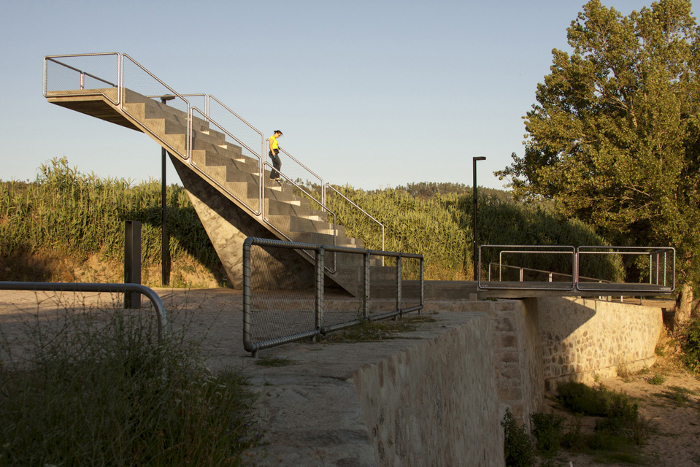
Ateliermob's Open-Air Theatre in Rio de Moinhos; photo: Zoraima de Figueiredo
At a smaller scale, the temporary public space Casa do Vapor (Vapour House) acts as a hub, connecting artists, architects and students from a number of countries to community agents of the self-built South Lisbon neighbourhood of Cova do Vapor. Kick-started by the international collective EXYZT, this repurposed wooden construction was built collectively; it is now a neighbourhood meeting point, home to educational and leisure activities. It received a Lisbon Architecture Triennale 'Crisis Buster' grant.